


Low Energy Design
Design that minimises impact and maximises performance
By combining research with hands-on experience, we deliver buildings that perform better; provide comfortable and healthy spaces; cost less to operate; and actively contribute to a more sustainable future.
As architects contributing to the future built environment, we recognise our profession’s unique position and responsibility to address and positively impact climate change. A sustained commitment to this responsibility has shaped our development: informing our methods; expanding our expertise; and guiding the way we design.
Low Energy Design
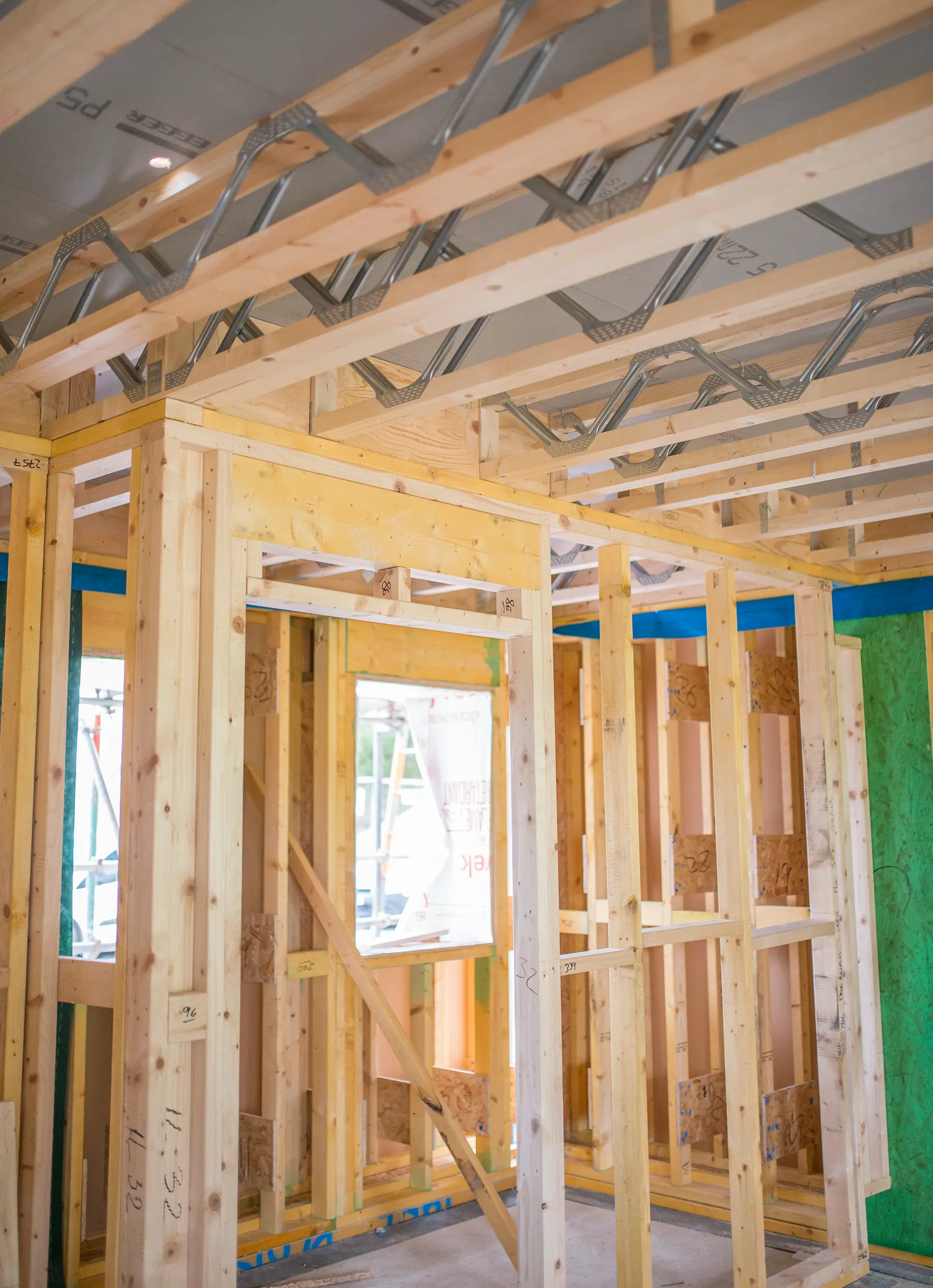
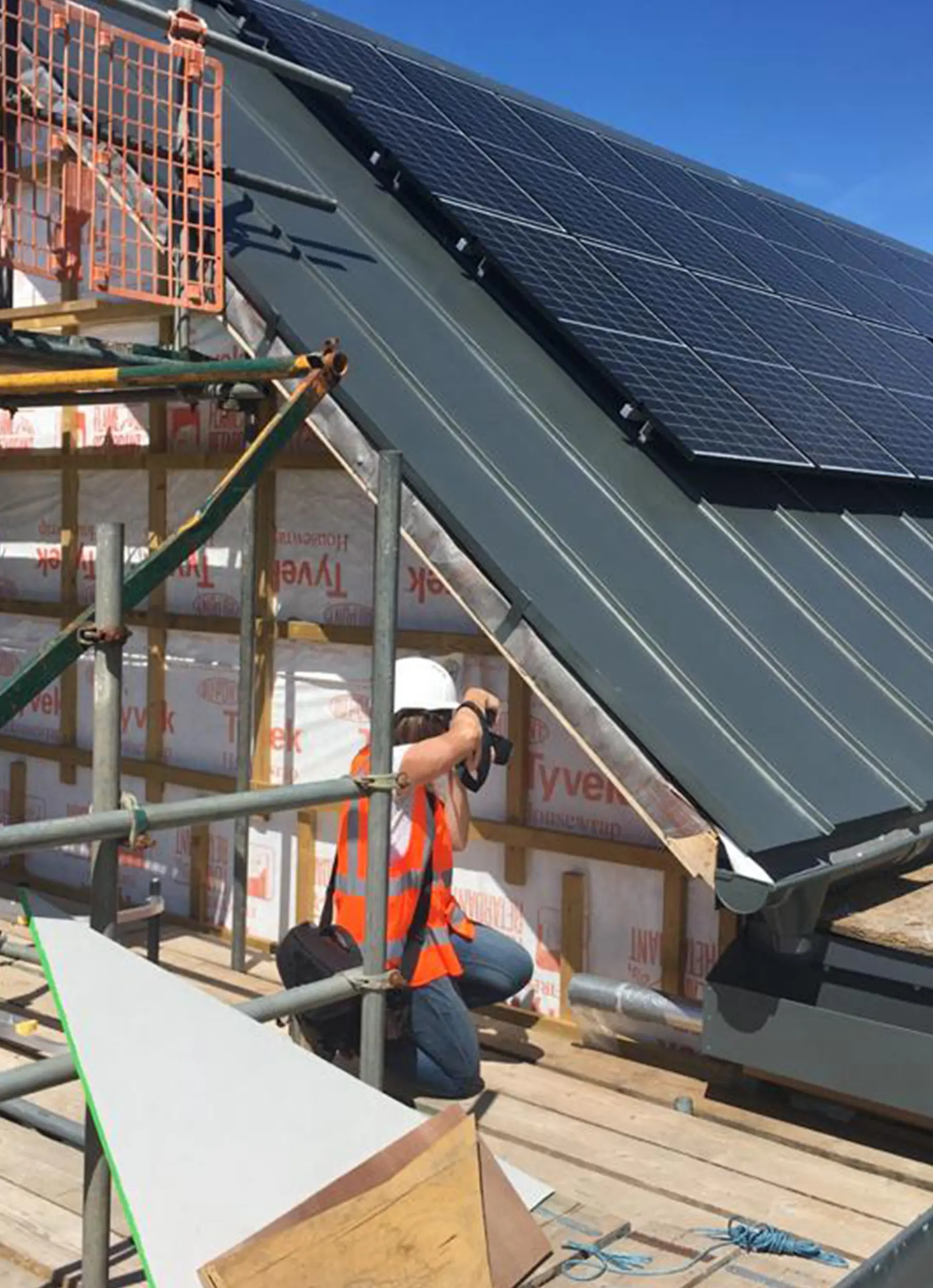
We integrate our knowledge and expertise into each project as we actively seek opportunities to: reduce energy demand through well-designed physical fabric; harness renewable technologies; and promote healthier indoor environments by eliminating materials linked to toxin emissions.
We assess the suitability of different strategies on a project-by-project basis to ensure that our response is considered, holistic and appropriate to the project. In this way we design buildings for long-term environmental and social value.
Our team has extensive experience designing to the rigorous standards of Passivhaus, delivering exceptional energy performance and thermal comfort. We also work within leading sustainability frameworks such as BREEAM, ensuring our buildings meet the highest benchmarks for environmental responsibility, occupant wellbeing, and long-term operational efficiency.
Designing to Passivhaus
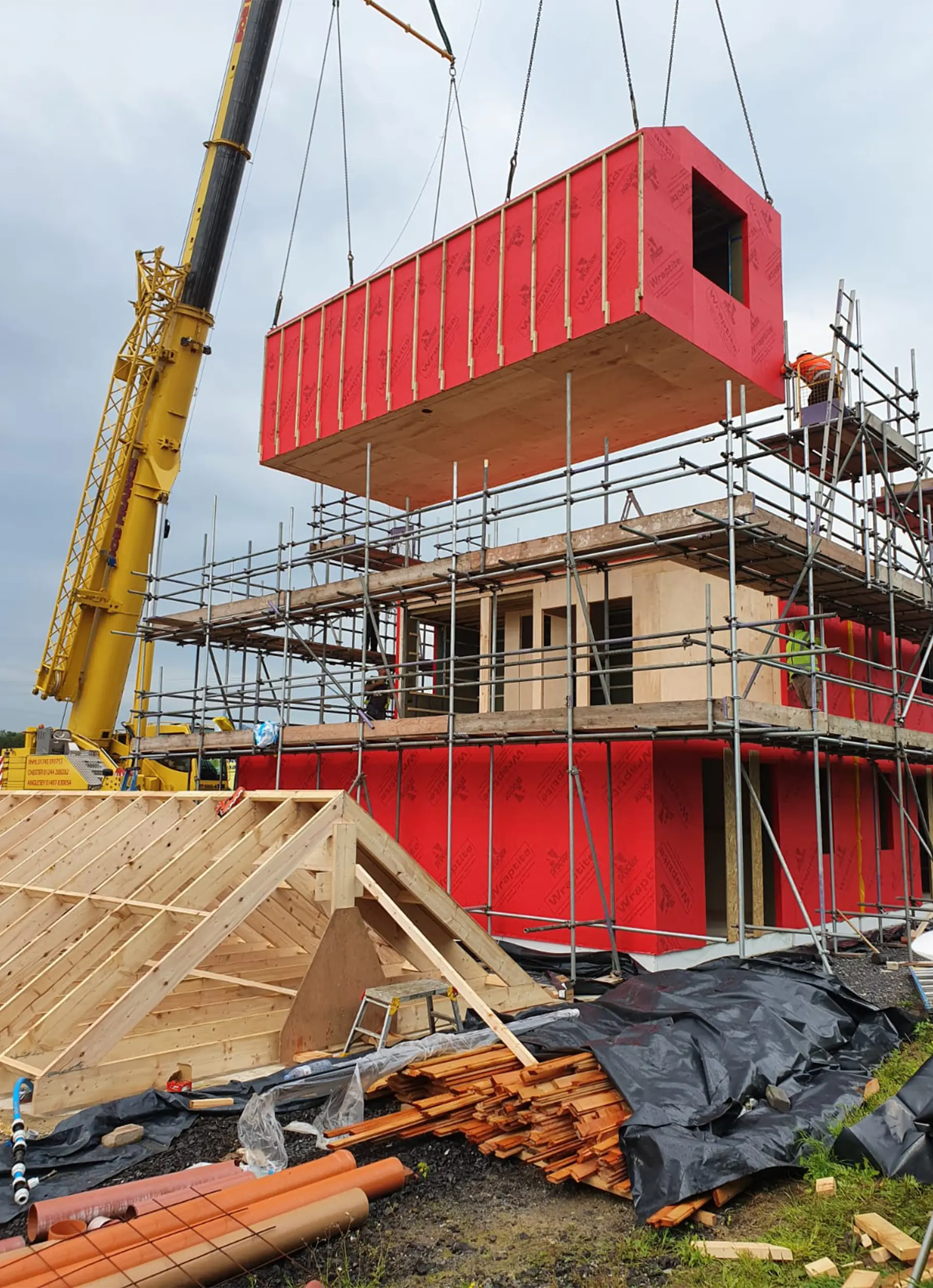
Passivhaus is a performance-based standard for energy-efficient buildings. As a practice with an in-house Passivhaus certified architect, we design and deliver buildings across all sectors that meet this stringent requirement.
Coupled with our expertise in low carbon construction, these two specialisms align to enable us to create buildings that have an exceptionally low environmental impact, both in construction and in use.
Designing Passivhaus buildings closely aligns with broader sustainable design goals, focusing on the strict reduction of energy loss and the optimisation of free energy gains within a building’s environment. The result is ultra-low energy buildings that maintain comfortable indoor temperatures year-round with minimal reliance on heating or cooling. This dramatically reduces operational energy use and carbon emissions, while enhancing occupant comfort and wellbeing.
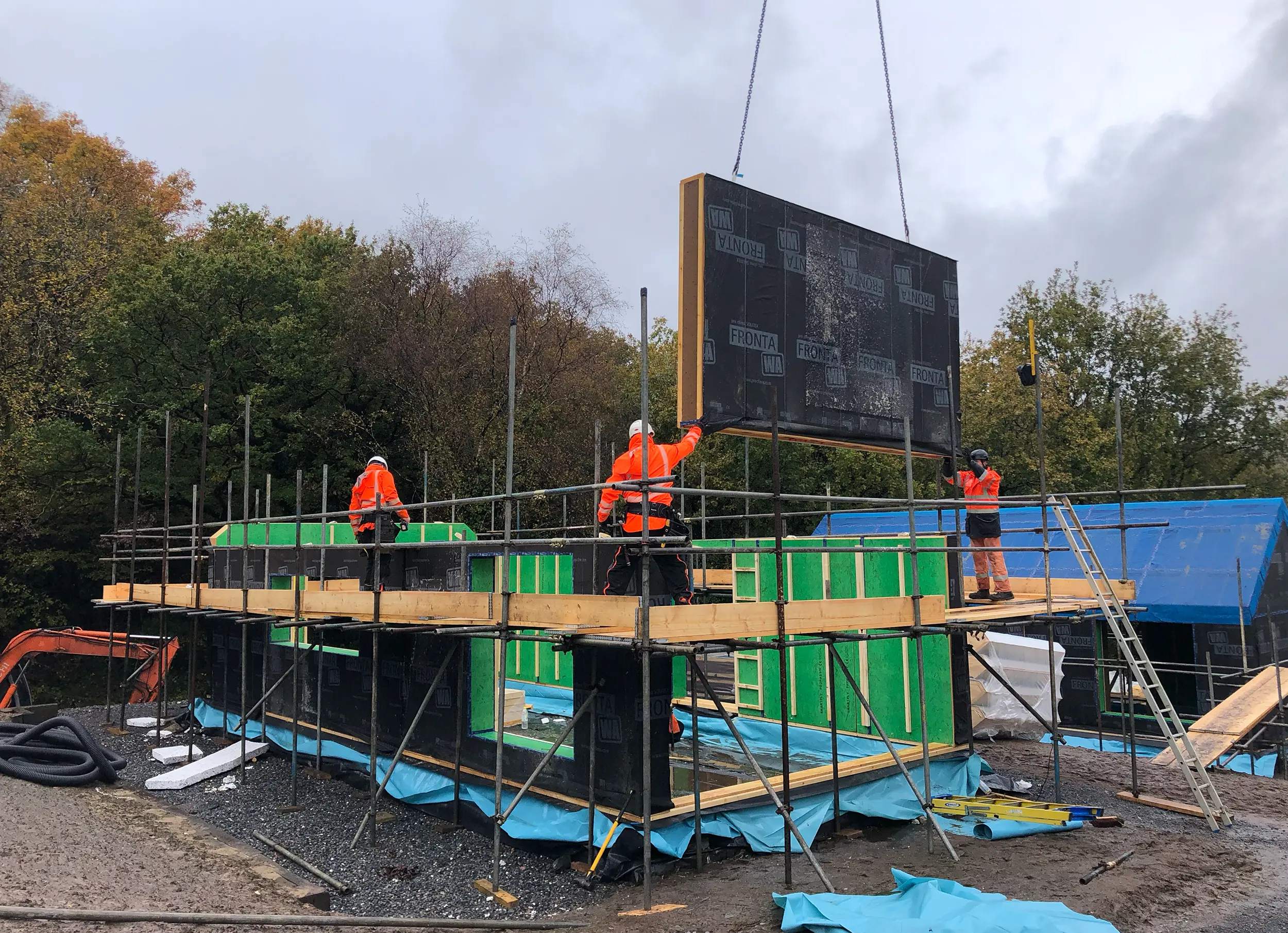
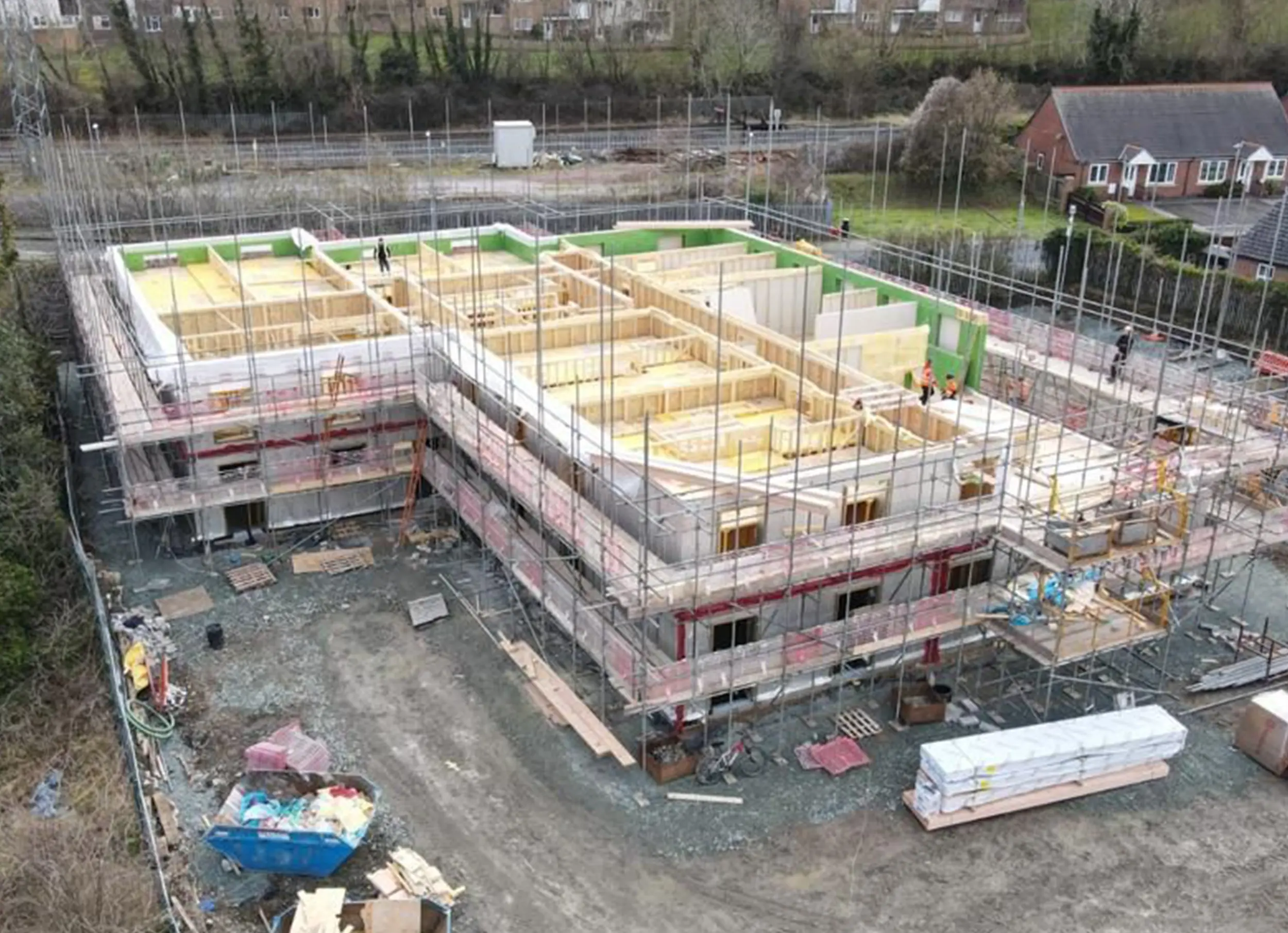
Designing for low energy begins from the outset. Whilst any proposal can be improved and enhanced, the Passivhaus approach is most effective when applied from the earliest stages – starting with a thorough analysis of the site. This process typically includes:
- Optimising site layout and orientation to maximise potential for passive strategies, including positive solar gain. This involves careful consideration of the sun path, seasonal variation, existing vegetation, adjacent buildings, topography and altitude and other elements that influence shading and exposure.
- Form factor – this measures the ratio of the building’s heat loss area to its useful internal floor area. A lower form factor reduces heat loss significantly, lessening the demand on high performance insulations. We carefully consider form factor early in the design process, balancing energy efficiency, site constraints and the architectural brief to ensure it supports – rather than restricts – the overall design.
- High performance building fabric. Passivhaus requires a building envelope that exceeds current building regulations. Whilst these requirements are more rigorous, the costs of delivering Passivhaus quality buildings can be effectively managed through intelligent design. The standard places a focus on minimising heat loss through a high-performance fabric, which typically includes above-average levels of insulation, triple glazed windows, an airtight layer to prevent heat loss through air leakage and infiltration, and the careful reduction of thermal bridges and defects. Our team has considerable experience in designing and delivering these technical solutions. We lead on-site implementation through detailed toolbox talks, proactive defect identification and hands-on problem solving. We are even quite handy with a roll of airtightness tape!
- Low energy systems and ventilation with heat recovery – Passivhaus buildings use highly efficient heating and cooling strategies, often requiring only minimal active heating. Central to this is the use of whole-building ventilation with heat recovery (MVHR), which provides a continuous supply of fresh air, while significantly reducing energy loss by pre-heating incoming fresh air using warmth recovered from outgoing air. This maintains a healthy, comfortable indoor environment with minimal heat demand. While Passivhaus buildings can be paired with technologies such as air source heat pumps, our recent projects—including William Ainge Court and Millers Place—demonstrate how exceptionally low energy requirements can be met with simple, low-tech solutions. In both cases, heating is effectively delivered through standard panel heaters, illustrating the efficiency of well-executed Passivhaus design.
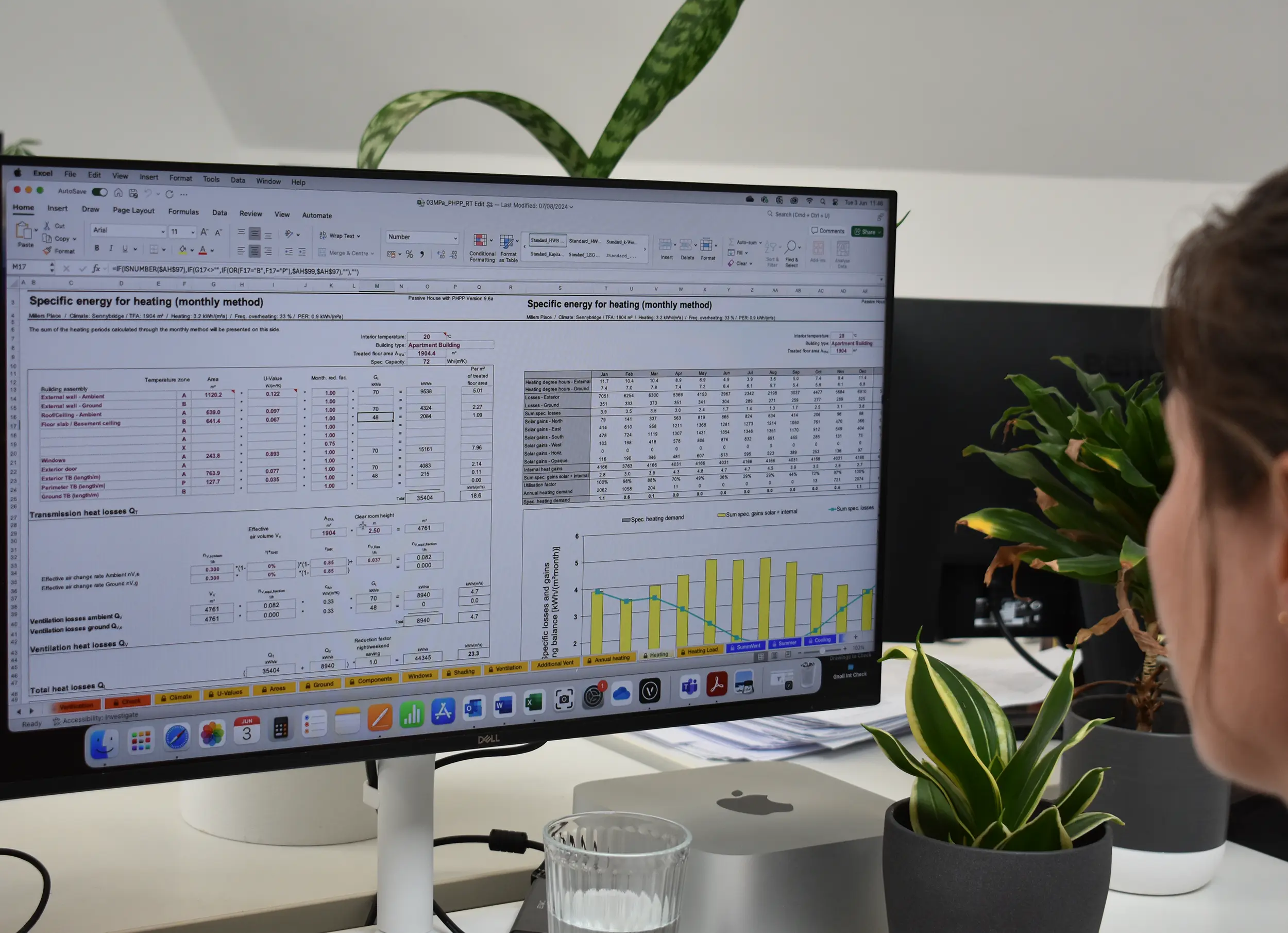
Underpinning the design process is a developed understanding of building physics and comfort data provided using the PassivHaus Planning Package (PHPP), a specialist software tool developed to design low-energy buildings. The tool is used throughout our design process as a method of modelling and analysing a building’s predicted energy performance; understanding heating and cooling demands; and identifying weaknesses and opportunities. This allows us to fine-tune the design to ensure it delivers when built. The tool also underpins other valuable assessment paths including the AECB’s CarbonLite Standards, which we have found provides a very positive alternative target where Passivhaus is not deemed appropriate.
As designers we work closely with our clients to establish clear sustainability ambitions and develop the technical solutions needed to achieve them. However, when it comes to delivering genuinely low energy buildings, it’s the quality of on-site execution that ultimately determines success.
Here, the gap between design intent and as-built performance is well documented – and often disappointing. As Architects who take buildings from briefing through to post-occupation, we therefore work to help ensure that the build quality reflects the aspirations and careful thought of the design.
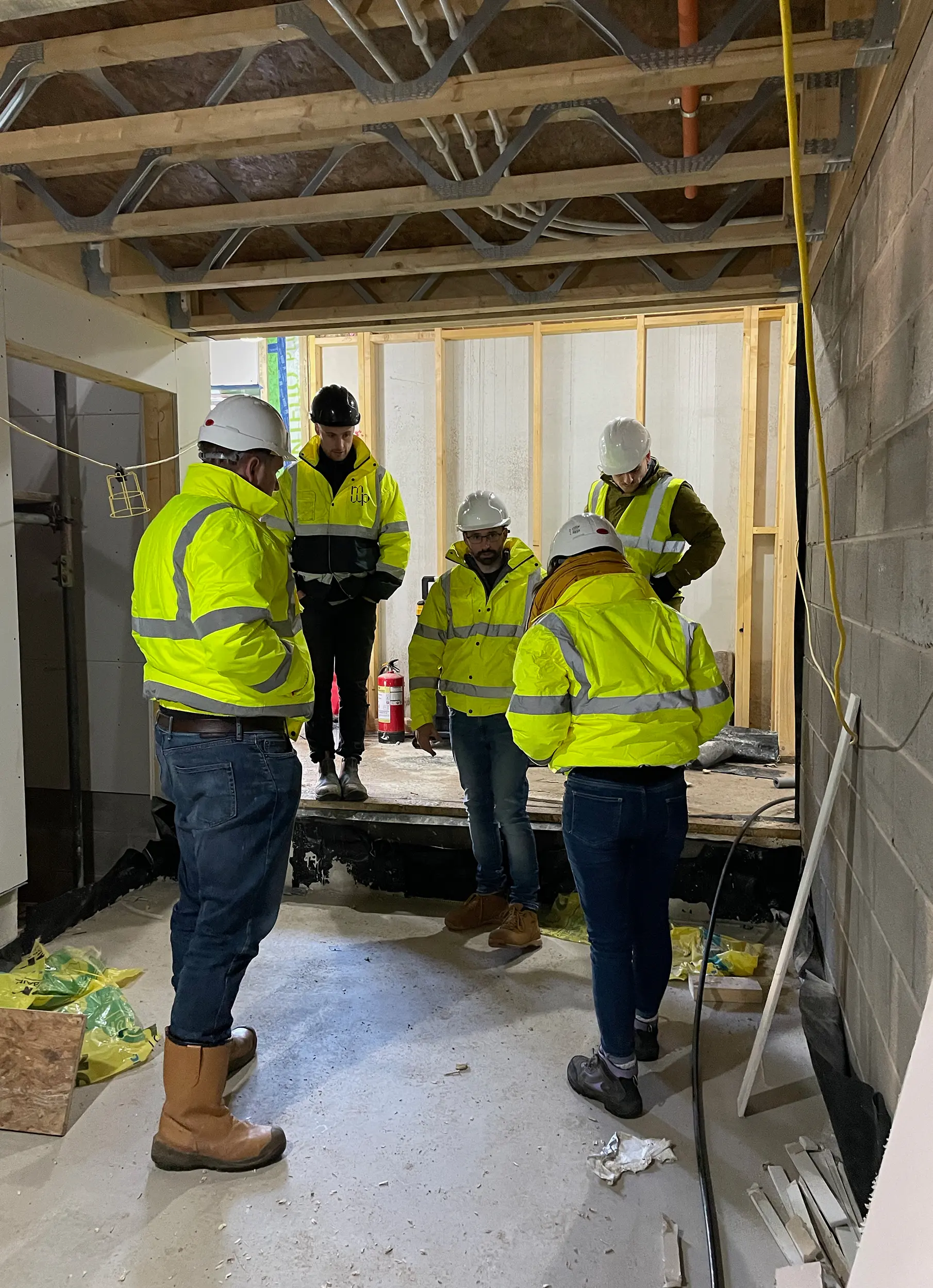
One of the strengths of the Passivhaus Standard is a robust quality assurance process. It includes detailed photographic evidence, product tracking, and rigorous airtightness testing to ensure the design intent is faithfully realised. We look to foster a collaborative site culture where everyone – from consultants to contractors – are invested in achieving the required standards.
This ethos underpins all our projects, ensuring that regardless of the requirement or desire for certification, we follow a sustainably focused approach to site and building design. Explore some of our low energy designs below: